First Round of Abstract Submission Ends: Dec 31, 2026
Extended Early Bird Ends: Dec 28, 2026
Keynote Speakers
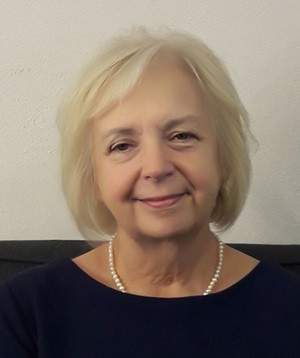
Prof. Katarzyna Turnau
Jagiellonian University, Poland
Title: Beyond the Root: Viewing Medicinal Plant Microgreens as Holobionts
Professor Katarzyna Turnau is a mycologist and Professor at the Jagiellonian University, Poland, specializing in plant–microbe interactions, mycorrhizal symbiosis, fungal biotechnology, and ecological restoration. Her research focuses on the role of beneficial fungi in improving plant nutrition, stress tolerance, and phytoremediation, with particular interest in medicinal plants and microgreens. She has led numerous national and international research projects, including collaborations supported by the Alexander von Humboldt Foundation and other international research programmes. In recent years, her work has expanded toward sustainable biotechnologies, integrating fungal-based solutions for agriculture, soil restoration, and circular bioeconomy. She is also the scientific founder of Myco Renew, a biotechnology startup developing fungal technologies for textile bio recycling. Professor Turnau has authored over 150 scientific publications and continues to bridge fundamental research with practical applications in sustainable plant production and environmental biotechnology.
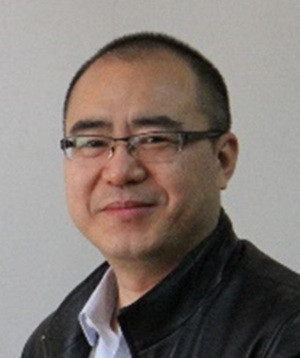
Prof. Fulai Liu
University of Copenhagen, Denmark
Title: Root and shoot coordination of crop plants in response to abiotic stresses
Fulai Liu is a full Professor in Crop Stress Physiology at the Department of Plant and Environmental Sciences, University of Copenhagen, Denmark. He received BSc in Agronomy from China Agricultural University in 1992, MSc in Horticulture from University of Hannover in 2000, and PhD in Crop Physiology from Faculty of Science, University of Copenhagen in 2004. His research concerns the regulation of growth and functioning of crop plants subjected to environmental perturbations particularly drought stress. He has significantly contributed to explore the role of abscisic acid in crop response to abiotic stresses. For the first time in literature, he reported a transgenerational effect of elevated CO2 concentration on drought adaptation and grain quality in wheat. Besides, he elucidated the roles of stress priming and cross stress tolerance in barley and wheat plants. He has published more than 300 peer-reviewed papers, 3 books and 12 book chapters, and > 80 conference papers. His publications have been cited > 21000 times with an h-index of 79. He is a member of the editorial board for the Journal of Agronomy and Crop Science and an associate editor for Frontiers in Plant Science. He has supervised 24 MSc students, 48 PhD students, and 8 postdocs.
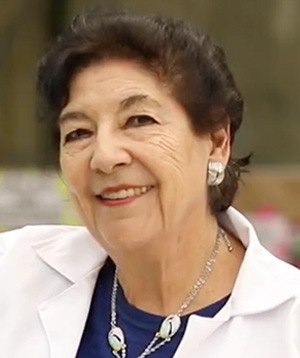
Prof. Eugenia J. Olguín
Institute of Ecology, México
Title: FLOATING WETLANDS FOR MICROPLASTICS AND MICROCYSTINS REMOVAL OPERATING IN URBAN PONDS
Emeritus Prof. Eugenia J. Olguín received her PhD in Biochemical Engineering from the University of Birmingham in the UK (1978). She has been working for 46 years in the development and evaluation of bioprocesses for the sustainable use of water with emphasis in the fields of phycoremediation and phytoremediation. Prof. Olguín was awarded as “Emeritus Professor” by the Institute of Ecology (2022), where she has been working for the last 37 years. She is member of the Mexican Academy of Sciences and has been distinguished as member of the National Research System since 1989. Prof. Olguín received the National Award ‘María Lavalle Urbina’ in Environment and Sustainable Development in 1999. She was awarded with the “Veracruz State Prize in Science and Technology” in the field of Technology, Development and Innovation” (2019). Her name was included among the 2% most cited researchers based on her Scopus profile (Loannidis et al., Plos Biology, 2020). She was awarded the “Innovation Award” by the “World Association of Industrial and Technological Research Organizations” (WAITRO) in 2020. The International Society of Applied Phycology (ISAP) awarded her as “Distinguished Applied Phycologist” (2021). She is currently the President of the International Society of Environmental Biotechnology, ISEB. She is the founding President of the Latin American Society of Environmental and Algal Biotechnology (SOLABIAA) (2008-2011) and the Editor-in-Chief of the journal of this Society (RELBAA, Revista Latinoamericana de Biotecnología Ambiental y Algal).
Dr. Chien-Yu HUANG
Louisiana State University - AgCenter, USA
Title: To be confirmed.
Will update soon.
Prof. Ana María Heilman
North Dakota State University, USA
Title: To be confirmed.
Will update soon.
Prof. Boulos Chalhoub
Agroscope, Switzerland
Title: To be confirmed.
Will update soon.
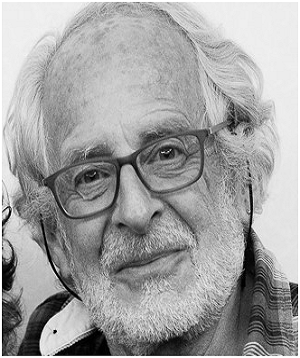
Professor. Sven Beer
Tel Aviv University, Israel
Title: Photosynthetic Properties of Marine Plants
Professor (now Emeritus) Sven Beer (Faculty of Life Sciences, Tel Aviv University) is a researcher in the field of marine photosynthesis of macroalgae, seagrasses and photo-symbionts. He has some 130 publications to his name as well as the textbook “Photosynthesis in the Marine Environment”, ISBN 978-1-119-97958 (soon out in its 2nd edition). His email is svenb@ex.tau.ac.il and his homepage is https://en-lifesci.tau.ac.il/profile/svenb .
Prof. Sanet Janse van Vuuren
North-West University, South Africa
Title: Diversity of Trachelomonas in Angolan freshwaters
Prof. Sanet Janse van Vuuren is a phycologist and Associate Professor in the School for Biological Sciences at North-West University, South Africa, where she has been involved in teaching and research since 1995. She holds a Ph.D. in Botany, and her research focuses on freshwater algae and cyanobacteria, particularly their identification, taxonomy, morphology, ecology and relationships with water quality. She has published extensively on freshwater algae and cyanobacteria and has contributed to international reference works, including Wetzel’s Limnology. She is also co-author of Easy Identification of the Most Common Freshwater Algae. Her more recent research focuses on algal taxonomy and biogeography, including desmids, dinoflagellates and euglenids from southern and tropical Africa. Teaching has remained an important part of her academic career, and she has received recognition for excellence in teaching and learning. Her career combines a long-standing commitment to teaching with research on the diversity and ecology of freshwater algae.